 WA'S BEST RANGE OF PORTABLE HOMES
 9–10 WEEKS LEAD TIME
 EASY FINANCE
 WARRANTY COVER

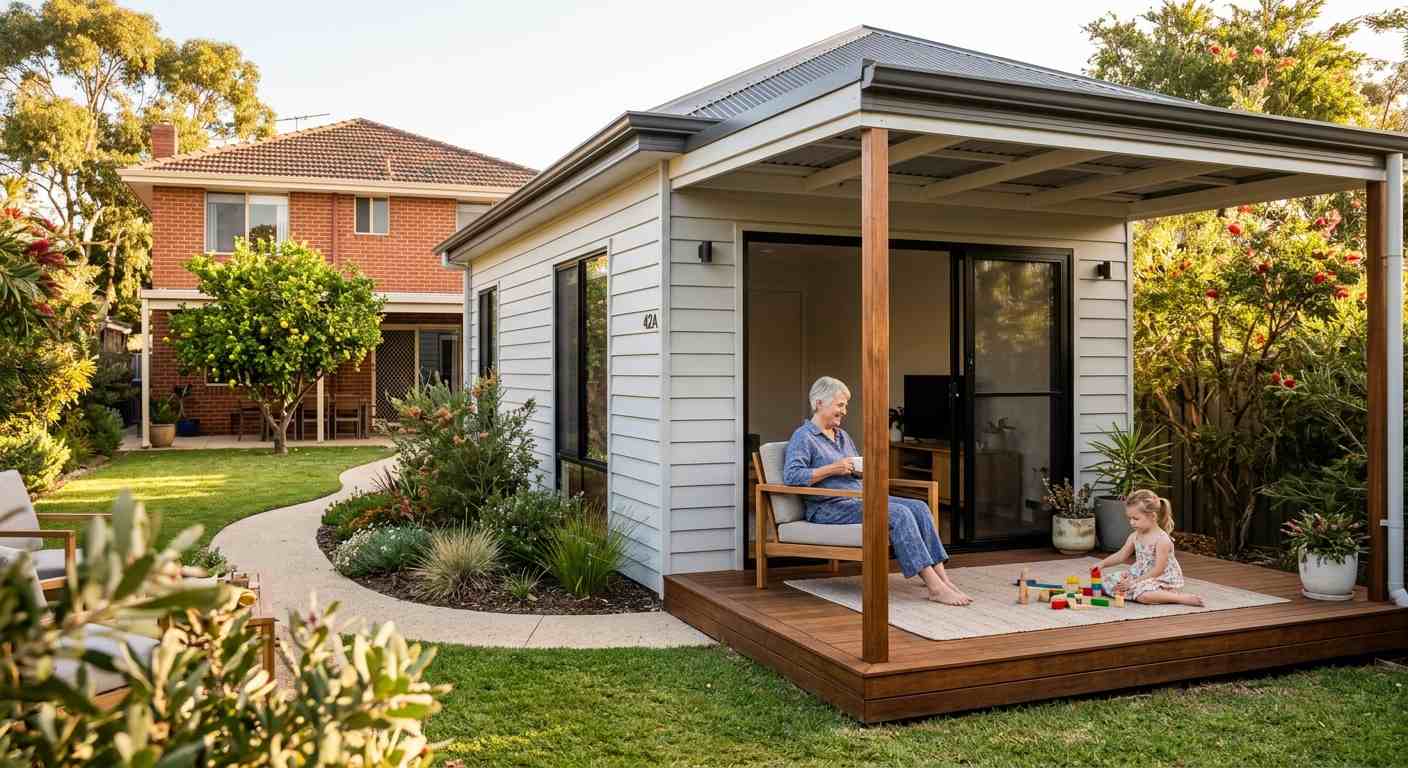
If you’ve been looking at ways to add a second home to your property, you’ll have come across the term ancillary dwelling. In Western Australia, it’s the official planning name for what most people call a granny flat, and the State Government has relaxed the rules to make them easier to build. But the details matter: how big one can be, who can live in it, and which approvals you need. This guide explains the ancillary dwelling rules in plain English, so you know where you stand before you choose a design or a builder.
Ancillary Dwelling WA Overview
An ancillary dwelling is a self-contained home built on the same property as a main house. It has its own kitchen, bathroom, and living space, so someone can live in it independently, but it shares the lot with the main house and is secondary to it, which is what “ancillary” means.
In everyday language, it’s a granny flat, and people often use the two terms interchangeably. You may also see the term ancillary dwelling unit, or ADU, and some states call it a secondary dwelling. In WA planning documents, “ancillary dwelling” is the term that counts, so it’s the one to use when you talk to your council.
Ancillary Dwelling WA: Definition in Western Australia (R-Codes)
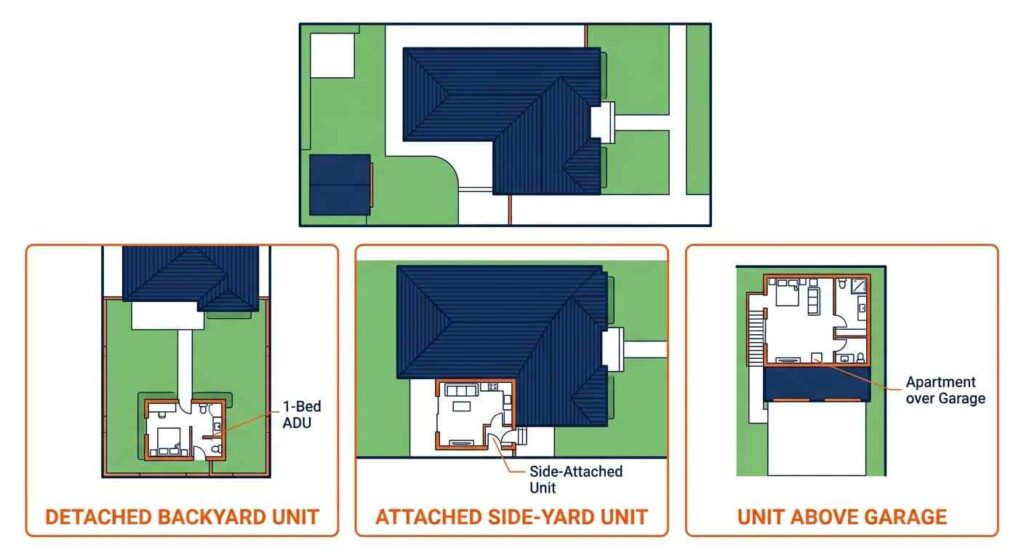
Broadly, Western Australia’s Residential Design Codes (R-Codes) define an ancillary dwelling as a self-contained dwelling on the same lot as a single house, which can be attached to the main house, built into it, or completely separate. That covers a backyard unit, a unit above a garage, or a self-contained wing added to the existing home.
Because ancillary dwelling units are dwellings, they have to meet the same building standards as any other home. A permanent, self-contained ancillary dwelling is generally classified as Class 1a under the National Construction Code, which is why requirements such as energy efficiency, glazing and smoke alarms apply.
Our Class 1A page covers these requirements in detail.
The 70m² Rule
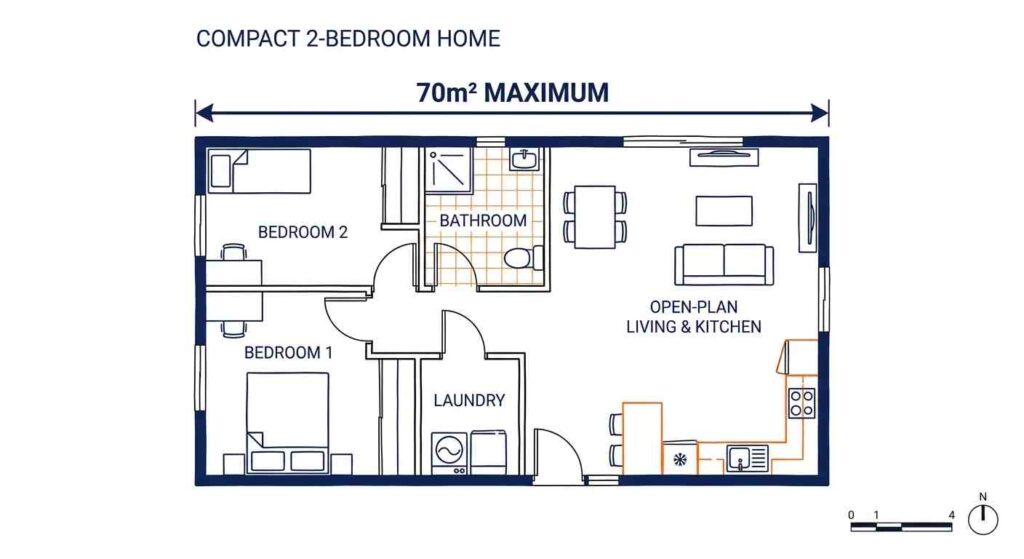
The State Government’s ancillary dwelling WA reforms set a maximum of 70m² for a compliant ancillary dwelling. This is an internal floor area limit, so smart space planning matters more than extra square metres. A 70m² home can comfortably fit two bedrooms, a bathroom and open-plan living.
As a guide, Perth Dynamic Solutions’ Half Expanders range from 27m² to 53.1m², and our Class 1A homes go up to the 60m² Horizon, so they all sit within the limit. Our largest model, the Meridian (70–80m²), is at or above it, so check with your council whether it suits your block as an ancillary dwelling or as a primary dwelling.
Who Can Live in an Ancillary Dwelling?
The WA Government’s planning reform information sheet says you can build a compliant ancillary dwelling of up to 70m² on your property for a relative, a friend or to rent out. That opens up several common uses:
- Housing ageing parents close by while keeping their independence
- Giving adult children space while they save for a home
- Hosting guests or long-stay visitors
- Earning rental income from a self-contained unit
If you plan to rent it out, also check your council’s requirements and the residential tenancy rules that apply to landlords.
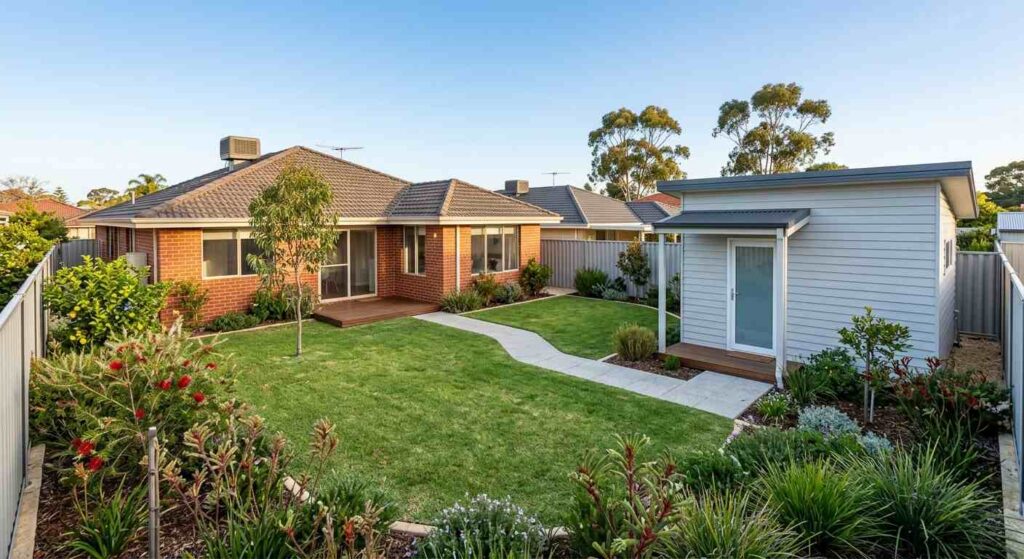
Ancillary Dwelling Building Permit Required: Western Australia Rules
A building permit is required for most ancillary dwellings in WA, because you’re constructing a habitable building. The permit confirms your plans meet the National Construction Code, covering structure, energy efficiency, fire safety and services.
Planning approval is a separate question. Under the State’s planning reforms, an ancillary dwelling that meets the R-Codes requirements, including the 70m² cap, can often go ahead without separate planning approval. Your local planning scheme and your lot can change that, so the simplest approach is to confirm both with your local council before you commit to a design.
A builder who manages or guides the approval process can save you a lot of time. In our Class 1A process, our council approval partner handles the shire paperwork for a flat $4,500 fee. This article is general information only, so always confirm requirements for your own property with your council.
What to Check on Your Site
Before you choose a design, check:
- Lot size and zoning: whether your lot and local planning scheme allow an ancillary dwelling
- Setbacks: the required distance from boundaries and from the main house
- Access: whether a delivery truck and crane can reach your backyard (narrow driveways and tight corners are common in Perth)
- Services: power, water and wastewater or septic connections
- Bushfire risk: properties in bushfire-prone areas need a BAL assessment
- Parking and landscaping: any council requirements that apply to your lot
Choosing a Build for Your Ancillary Dwelling
Once you know the rules, the choice comes down to size, budget and how much of the process you want to manage. Perth Dynamic Solutions builds ancillary dwelling units in Western Australia across three ranges:
- Half Expanders: 1–2 bedroom homes from 27m² to 53.1m² for narrow or smaller blocks, from $45,000+GST
- Class 1A homes: built to the same standard as a house, with council approval assistance, from $23,000+GST
- Studios: self-contained cabins and pods for compact blocks, from $19,000
Allow for council approval, site preparation and service connections on top of the unit price.
Tell us your block dimensions, and we’ll point you to the right fit.
Ancillary Dwelling FAQs
What is an ancillary dwelling?
An ancillary dwelling is a self-contained home on the same lot as a main house, with its own kitchen, bathroom and living area. In WA, it’s the official planning term for a granny flat.
How big can an ancillary dwelling be in WA?
Under the State Government’s reforms, a compliant ancillary dwelling can be up to 70m². Larger homes may need a different approval pathway, so check with your council.
Can I rent out an ancillary dwelling in WA?
Yes. The State Government says you can build a compliant ancillary dwelling for a relative, a friend, or to rent out. If you plan to rent it, also check your council’s requirements and the residential tenancy rules that apply to landlords.
Do I need planning approval as well as a building permit?
Not always. An ancillary dwelling that meets the R-Codes requirements, including the 70m² cap, can often proceed without separate planning approval, but a building permit is still required. Your local planning scheme and lot can change this, so confirm with your council first.
Can an ancillary dwelling be sold separately?
Generally no. An ancillary dwelling WA sits on the same title as the main house, so it adds value to the property as a whole rather than being sold on its own. If you’re considering subdivision or strata, speak to a planner or lawyer before you build.
Final Thoughts
An ancillary dwelling WA is one of the most practical ways to add space, support family or earn rental income, and WA’s recent reforms have made them easier to approve. Know the 70m² limit, confirm your approvals with council, and pick a build that suits your block.
Explore Perth Dynamic Solutions’ Half Expanders, Class 1A homes, and Studios, or get in touch for a quote tailored to your block.