 WA'S BEST RANGE OF PORTABLE HOMES
 9–10 WEEKS LEAD TIME
 EASY FINANCE
 WARRANTY COVER

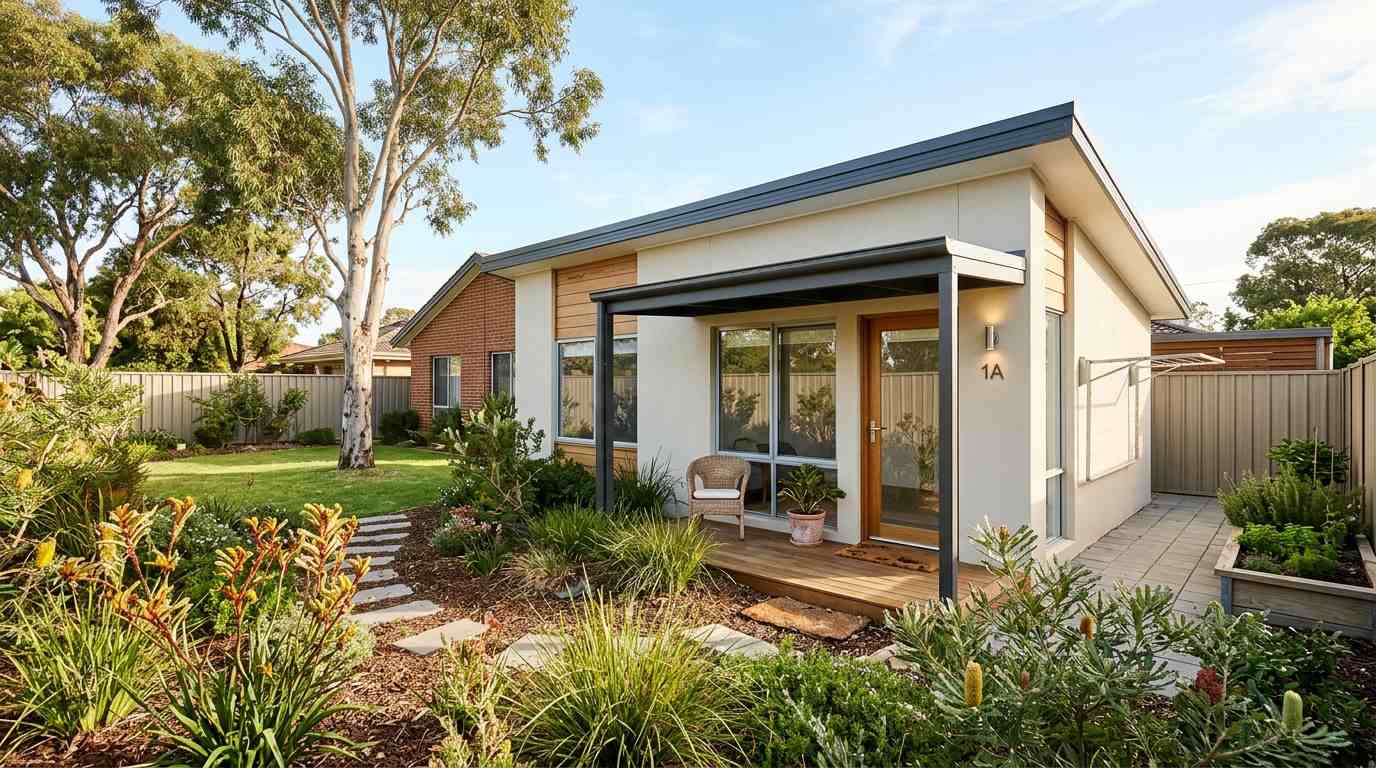
A granny flat can be one of the most useful additions to a property, but how much it adds is harder to pin down than most advertising suggests. There’s no fixed percentage. The uplift depends on your location, what you build, whether it’s approved, and how buyers in your area value a second dwelling. So how much value does a granny flat add in practice? This guide covers what drives the number, what the research says, and two questions many owners ask before they build a granny flat in Perth: is a granny flat classed as an asset, and how do Centrelink’s granny flat rules affect pensions? It’s general information only, not financial, tax or legal advice.
What Affects How Much a Granny Flat Property Value
Most of the uplift comes down to a handful of factors:
- Location and comparable sales: what similar properties with a secondary dwelling have sold for nearby, compared with those without one
- Granny flat rental income: a self-contained unit that can earn rent is worth more to investors, and to owner-occupiers who plan to rent it
- Size, layout and quality: a self-contained one- or two-bedroom unit with its own kitchen and bathroom appeals to more buyers than a basic cabin
- Approvals: an unapproved or non-compliant granny flat can be a liability at sale, because buyers and their lenders want permits and compliance certificates
- Yard space: a unit that takes over most of the backyard can put off buyers who want outdoor space, which can cancel out part of the gain
- Privacy and street appeal: a private entrance, separation from the main house, and materials that suit it tend to appeal to more buyers
- Parking: replacing a garage or off-street parking with a granny flat can hurt value where secure parking is prized
How Much Value Does a Granny Flat Add? What the Research Says
Several Australian studies point to a meaningful uplift, but they need careful reading. A 2019 analysis by CoreLogic and Archistar of homes in Sydney, Melbourne and Brisbane estimated that a granny flat could lift a home’s value by roughly 30 per cent and add around 27 per cent to weekly rent. A later report from Archistar, Blackfort and CoreLogic put the potential gain at about 32 per cent for a house with two extra bedrooms and a bathroom, which on a $500,000 home works out to roughly $160,000. These are estimates of potential based on eastern seaboard markets, not guaranteed results, and none of them is specific to Perth.
The rental evidence is also strong. Research by InvestorKit, reported by Domain, found that adding a granny flat can lift a property’s overall rental yield by roughly 1.4 to 1.65 percentage points compared with similar homes without one. In other words, a granny flat rental yield can be high because the building cost is usually well below the cost of a separate home.
Sale price results are less predictable. Valuation firm Herron Todd White once noted it was untested whether $100,000 spent on a granny flat would add $100,000 to a property’s value, a reminder not to assume that every dollar spent comes back at sale. Real outcomes depend on local comparable sales, build quality, and approvals. The most reliable way to get a number for your own property is to ask a licensed valuer or a few local agents for a before-and-after estimate.
How to Estimate Your Granny Flat Return on Investment
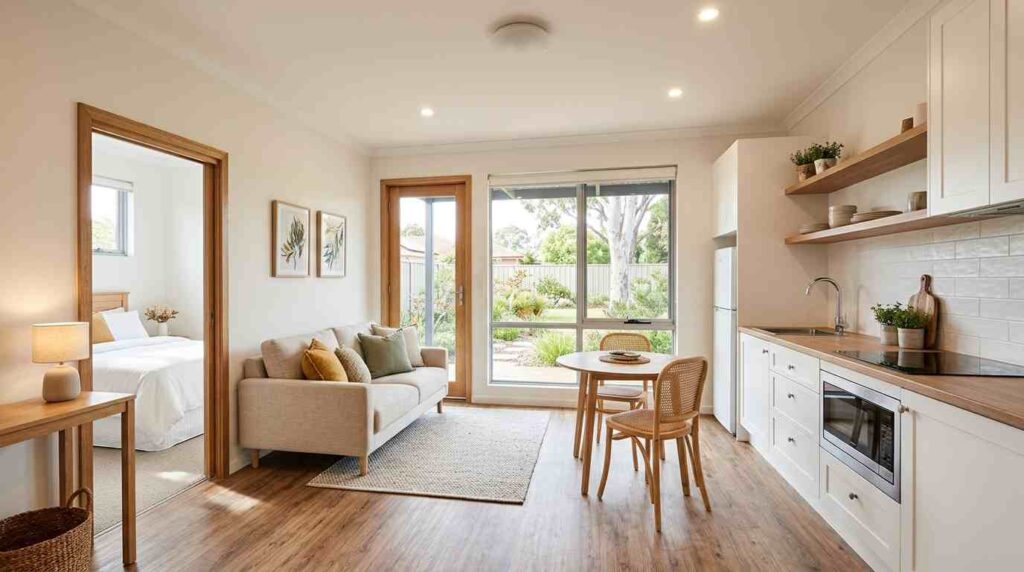
A simple starting point for a granny flat return on investment is to compare the all-in cost with the rent it could earn. Add up the unit price, delivery, site preparation, service connections, and approval costs. Then divide the expected annual rent by that total.
For example, a granny flat costing $100,000 all-in that rents for $350 a week earns $18,200 a year, a gross return of 18.2% before tax, insurance, maintenance and vacancy. This is an illustration only, not a forecast for your property. Check current rental listings near you and ask a property manager what a unit like yours would achieve. CoreLogic’s 2019 report put the outlay for a one-bedroom granny flat at around $120,000 and a two-bedroom at around $200,000, so use current quotes rather than relying on older figures.
Is a Granny Flat Classed as an Asset?
Is a granny flat an asset? In general, yes. A granny flat built on your property is a permanent improvement to the land and forms part of the real estate you own, so it adds to the value of that asset. How it’s treated for tax and for Centrelink can depend on how you use it:
- Tax: your main home is generally exempt from capital gains tax, but using a granny flat to earn rent can affect that exemption, and rent you receive is generally assessable income. How you use it matters, so speak to an accountant or tax adviser.
- Age Pension assets test: a principal home on land of up to 2 hectares is generally not counted, but how a granny flat is used, for example, if it’s rented out, can change how it’s assessed. Check with Services Australia.
- Lenders: an approved, compliant granny flat is easier to include in a valuation than an unapproved one, though each lender has its own policy.
A granny flat on land you own is also different from what Centrelink calls a granny flat interest, which is covered next.
How Do Centrelink’s Granny Flat Rules Affect Pensions?
The Centrelink granny flat rules use a different meaning of the term from real estate. Services Australia describes a granny flat interest as paying for the right to live in a specific home for the rest of your life, usually by giving money or assets to a relative or friend who owns the property. You can’t have a granny flat interest in a property you legally own. Here’s how the granny flat Age Pension rules work in plain English:
- Homeowner status and the assets test: how the interest is created determines whether Services Australia treats you as a homeowner or non-homeowner, and whether the value of the interest counts as an assessable asset.
- The reasonableness test: the value of a granny flat interest is the amount paid for it. Services Australia may apply a reasonableness test to what you contributed, and if it isn’t reasonable, the excess can be treated as a gift. There are four situations where a transfer is always treated as reasonable, whatever its value.
- The five-year rule: if you leave a granny flat arrangement within five years, Services Australia may look at why it ended, which can affect your pension and how your assets are assessed for aged care fees.
- Tax: since 1 July 2021, the ATO exempts certain written, binding, non-commercial granny flat arrangements from capital gains tax for eligible people, generally those of pension age or with a disability.
Put any arrangement in writing and get independent legal and financial advice before you commit. Services Australia also offers a free Financial Information Service. If you’re building a granny flat for a parent, check with Services Australia how their payments could be affected before you start.
Before You Build: Make Sure It’s Approved
An approved granny flat is worth more than an unapproved one, so get the paperwork right from the start. In WA, the State Government says you can build a compliant ancillary dwelling of up to 70m² for a relative, a friend, or to rent out. You generally need a building permit, and planning approval depends on your lot and how you’ll use the home. Keep your permit and compliance certificates, because buyers and valuers will ask for them. Our guide to ancillary dwellings in WA explains the rules in more detail.
Choosing a Build for Your Property
Perth Dynamic Solutions builds granny flat options in Western Australia, delivered Australia-wide:
- Half Expanders: 1–2 bedroom homes from 27m² to 53.1m², built to Class 1A standards, from $45,000+GST
- Class 1A homes: built to the same standard as a house, from $23,000+GST, with council approval assistance for a flat $4,500 fee
Allow for site preparation and service connections on top of the unit price, then compare the total with the rent and value uplift you expect.
Granny Flat Value FAQs
Do granny flats add value to a property in Perth?
In most cases, yes, if they’re well built, approved and suited to your area. Research suggests the gain can be significant, but it varies by market and layout, and it isn’t guaranteed to match what you spend. Ask a local valuer or agent for a before-and-after estimate based on recent sales near you.
Does a granny flat increase rental yield?
It often does. InvestorKit research reported by Domain found an increase of roughly 1.4 to 1.65 percentage points in overall rental yield, and a 2019 CoreLogic and Archistar analysis estimated around 27 per cent more weekly rent. Results depend on local rents and your build cost.
What is a granny flat interest?
It’s Services Australia’s term for paying for the right to live in a specific home for the rest of your life, usually by giving money or assets to a relative or friend. It can affect your Age Pension and aged care costs, so get advice before entering one.
Do I pay capital gains tax on a granny flat?
It depends on how it’s used. The granny flat capital gains tax rules include an exemption for eligible, written, non-commercial granny flat arrangements, and your main home is generally exempt, but renting out a granny flat can affect that. Speak to an accountant or the ATO about your situation.
Do I need a written agreement for a family granny flat arrangement?
For the ATO’s CGT exemption, the arrangement must be written and binding. Putting it in writing is also recommended for Centrelink purposes, so everyone is clear on who pays for what and what happens if the home is sold. Get independent legal and financial advice.
Final Thoughts
A granny flat can add value to a property, but the amount depends on your location, build quality, approvals and local rents, and the financial rules around pensions and tax can matter as much as the build itself. Get a local estimate, confirm your approvals, and speak to Services Australia or a qualified adviser before you commit.
Explore Perth Dynamic Solutions’ Half Expanders and Class 1A homes, or get in touch for a quote tailored to your block.
NOTE: This article is general information only and is not financial, tax or legal advice. Rules and thresholds change, so confirm your situation with Services Australia, the ATO or a qualified adviser.
READ ALSO: Modular Granny Flats Perth: Types, Designs & More
Ancillary Dwelling WA: The 70m² Rule and Who Can Live in One